
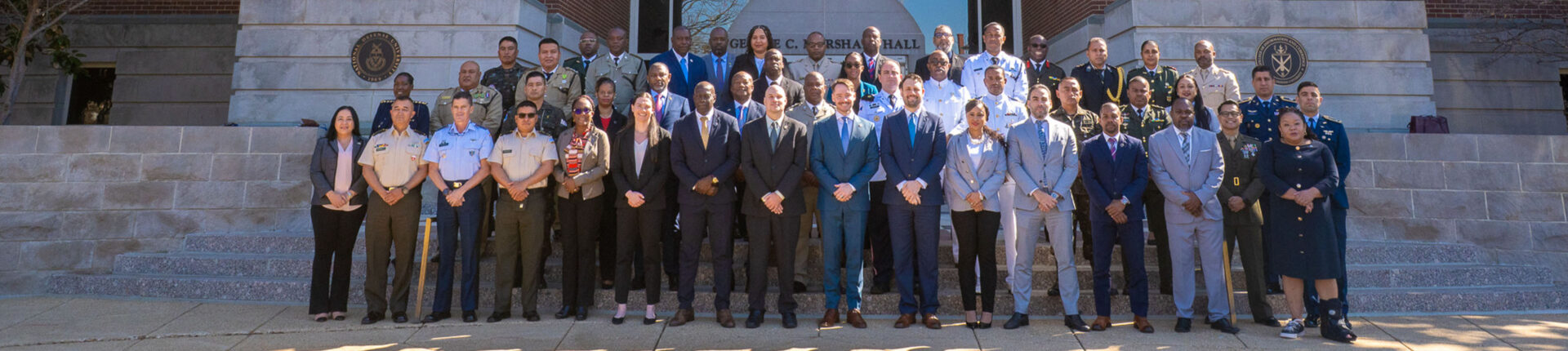
From 9 to 20 March, 2026, the William J. Perry Center for Hemispheric Defense Studies conducted the residential phase of its Caribbean Security and Defense course. It convened 52 participants from 16 partner nations for a two-week academic program.
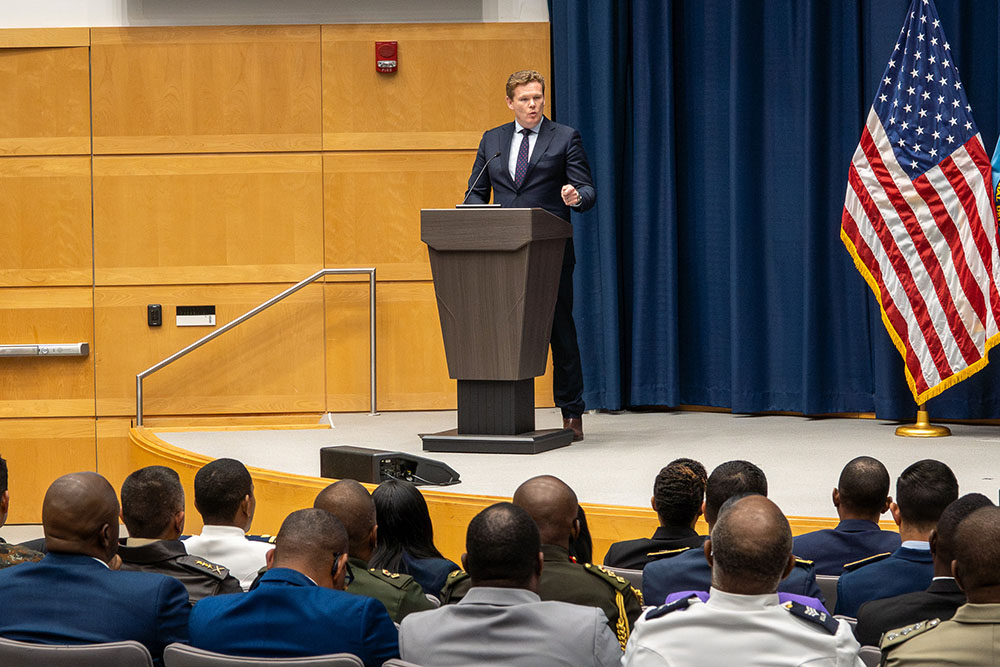
DASW Christopher Mamaux delivering keynote remarks
Dean of Academic Affairs Dr. William Godnick and Ms. Sydney Knapp led the course along with distinguished faculty, who supported its execution. The program examined the multidimensional security landscape confronting the Caribbean. Participants analyzed transnational organized crime, maritime insecurity, illicit finance and money laundering, cyber threats, geopolitical competition, and the region’s vulnerability to natural disasters, and they assessed how these challenges intersect with US policy frameworks and broader Western Hemisphere trends.
National Defense University President VADM Peter A. Garvin delivered remarks during the graduation ceremony. Deputy Assistant Secretary of War for Security Cooperation Mr. Christopher Mamaux delivered keynote remarks, underscoring the importance of security cooperation programs in fostering enduring partnerships, enabling burden sharing, and strengthening regional responses to transnational crime and security challenges.
During the first week, faculty-led sessions focused on global and hemispheric trends and emphasized the US National Security Strategy and its implications for the region. Participants engaged in discussions on geopolitics, transnational criminal organizations and terrorism, cybersecurity and emerging technologies, maritime and air domains, homeland defense, critical infrastructure, supply chains, and interagency and international cooperation.
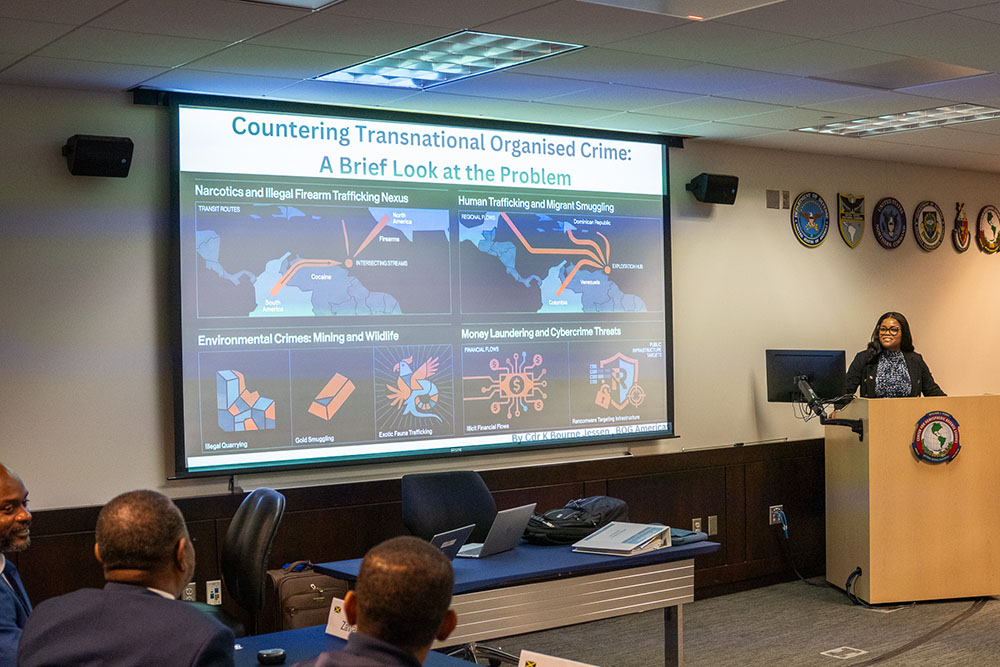
During the second week, each participant delivered a “Perry Talk” to their breakout group
For the second week, the program shifted to Caribbean-specific security realities, incorporating regional case studies and practitioner expertise. Faculty and guest speakers addressed maritime crime, illicit trafficking, and armed violence, the Caribbean Community Implementation Agency for Crime and Security (CARICOM IMPACS) and the regional security agenda, Regional Security System (RSS) support to civilian authorities and humanitarian assistance missions, cyber incident response in the Caribbean, the Haiti crisis, and the Silver Strand Exercise.
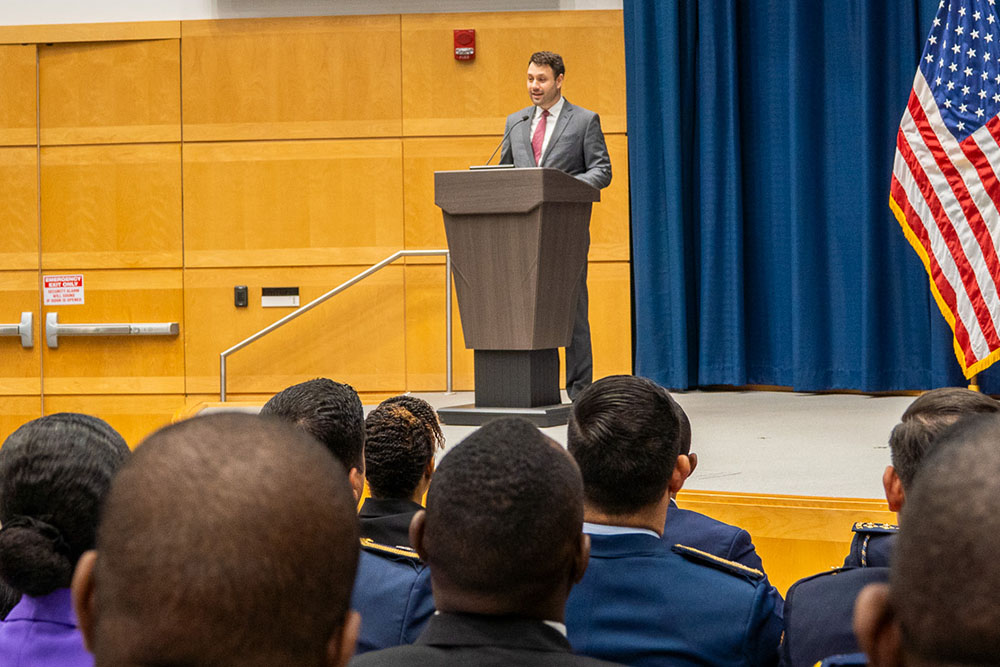
Deputy Director Ruben Lopez offering opening remarks at graduation
The Perry Center extends its sincere appreciation to the distinguished faculty, staff, and partners who contributed to the course’s success, including Course Coordinator Dr. William Godnick and Deputy Course Coordinator Sydney Knapp; Perry Center Professors Dr. Arturo Sotomayor, Dr. Boris Saavedra, Celina Realuyo, Jeffrey Zinsmeister, and Eric Driggs; Visiting Professors Tonya Ayow, Alexander Causwell, Danielle Jemmott, and Atlee Rodney (all WJPC graduates); and the dedicated Perry Center staff who ensured seamless planning and execution. We also thank presenters from National Defense University, the Air War College, Georgetown University, the Institute of Public Administration, the America First Policy Institute, the Center for Strategic and International Studies, CARICOM IMPACS, RSS, the Caribbean Policy Research Institute, and the Organization of American States. Their expertise and collaboration enriched the academic dialogue and strengthened the program’s impact across the region.
Through lectures, discussions, and collaborative exercises, the course strengthened strategic analysis, reinforced regional partnerships, and advanced the Perry Center’s mission to build enduring networks of defense and security leaders across the Hemisphere.