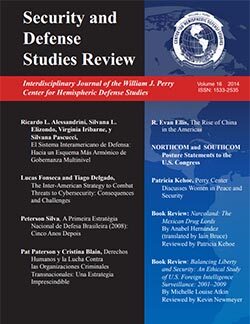
Transnational organized crime (TOC) in Latin America represents a formidable threat to national security. These illicit groups have operated in the Western Hemisphere for decades. Recently, however, the speed and violence associated with these non-state groups have exacerbated the magnitude of the problems to alarming levels. Criminal groups are not limited only to trafficking narcotics. They also operate human trafficking networks, illegal arms trafficking, engage in extortion, cybercrime, and political intimidation. This undermines security, generates instability, and scares away foreign investment and tourism. This essay examines initiatives underway in the Western Hemisphere to address the convergence of transnational organized crime and other illicit networks. It also provides suggestions for implementing more effective strategies to deal with illegal groups whose evolution threatens the national security of the United States and its allies.
Read more
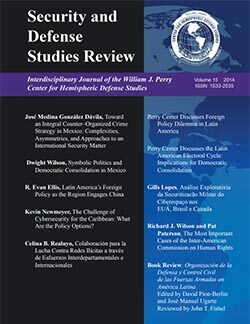
For a special report on the Commission, the Perry Center Publications Editor-in-Chief Patrick Paterson met with Professor Richard Wilson, Director of the International Human Rights Law Clinic at the Washington College of Law, to discuss the most important cases or reports in the history of the Commission. Professor Wilson, a frequent lecturer at the Perry Center, is a longtime observer of the Commission and Court, where he and his students have presented more than 30 cases. Of the thousands of cases and reports of the Commission, Professor Wilson selected a few that he thought were especially important or influential.
Read more
This paper studies the impacts of the military securitization of cyberspace in the international politics of the 21st century. Cyberdefense is chosen as the object of study precisely because it allows inferences to be made about the political-institutional materialization of this issue, seeking support in the theory of securitization, proposed by the Copenhagen School. In this sense, this paper seeks to: (i) identify the main existential (cyber) threats to the military sector, revealing why this process is intensifying in the 21st century; (ii) project the conditions for such securitization; and (iii) explain its effects on international politics, based on the cases of the United States, Brazil and Canada. To this end, the Spectrum of Military Securitization of Cyberspace (ESMC) is designed, a framework of analysis based on the theory of securitization with a focus on cyberdefense in a given time and space. As for the literature review, Brazilian and foreign authors in Political Science and International Relations figure mostly in the body of this work. As for the methodology, it uses the qualitative-quantitative analysis style, despite the use of interviews, case studies, discourse and document analysis. Its conclusion aims to corroborate the hypothesis that, in addition to the securitization of cyberspace by the military sector, this process is reflected in current international politics. Consequently, it is possible to situate the three cases in this ESMC.
Read more

This paper addresses some of the policy issues affecting cybersecurity in the Caribbean and how best to respond to those challenges. International organizations such as the International Telecommunications Union and the Organization of American States called for all states in the region to develop national cybersecurity strategies to protect their critical infrastructure, business interests, and private citizens. The Caribbean states have lagged in establishing national cybersecurity strategies. The challenge for Caribbean states and other developing nations remains how best to protect their security and economic interests in a connected environment. Which strategic paradigm fits the culture and the capabilities of such nations? This paper examines the threat and the various alternative frameworks to respond to the growing cyber threat including national security, economic, and public health approaches to cybersecurity.
Read more
In September 2013, the William J. Perry Center for Hemispheric Defense Studies conducted a Hemispheric Forum on US foreign policy in Latin America. The forum, one of a series of conferences that bring distinguished scholars together to discuss matters of urgency in the Hemisphere, addressed the dilemma faced by US policy makers in the current political environment in Latin America and the Caribbean. Panelists remarked on the political relations between the United States and Latin American nations, relations that have grown distant and contentious in the last decade. A summary of the discussion is provided for readers.
Read more
In December 2013 as part of a series of Hemispheric Forums, the William J. Perry Center hosted a round table discussion of democracy in Latin America. In particular, the group analyzed recent and upcoming elections in the Americas, events that might reflect the political uncertainty common in the region. The panelists included a number of subject matter experts on Latin American politics and democracy: Johanna Mendelson Forman, Senior Associate, Program on Crisis, Conflict and Cooperation at the Center for Strategic and International Studies; Roberto Izurieta, Director of Latin American Projects for the Graduate School of Political Management (GSPM) at George Washington University; and Harold Trinkunas, Charles W. Robinson Chair and Senior Fellow and Director of the Latin America Initiative at the Brookings Institution. Luis Bitencourt, Dean of Academics at the Perry Center, moderated the panel.
Read more
This article examines the foreign policy of Latin America and the Caribbean toward the People's Republic of China. It finds that, for those nations recognizing Taiwan, most Latin American nations have had relatively few political differences with the PRC. Exceptions include Brazil's bid for a seat on the UN Security Council and Mexico's receipt of the Dali Lama under the sexenio of Felipe Calderón. Within the region, the most important differences have emerged on issues of foreign economic policy. The article finds that Latin America's heterogeneous orientation toward China on economic issues may be understood in terms of four cross-cutting cleavages, which reflect economic, political, and geographic divisions in the region more broadly: (1) north versus south, (2) populist regimes versus market economies, (3) pure resource exporters versus industrialized exporters versus nonexporting capital recipients versus pure importers , and (4) Pacific versus Atlantic.
Read more
Twitter feed is not available at the moment.
William J. Perry Center