
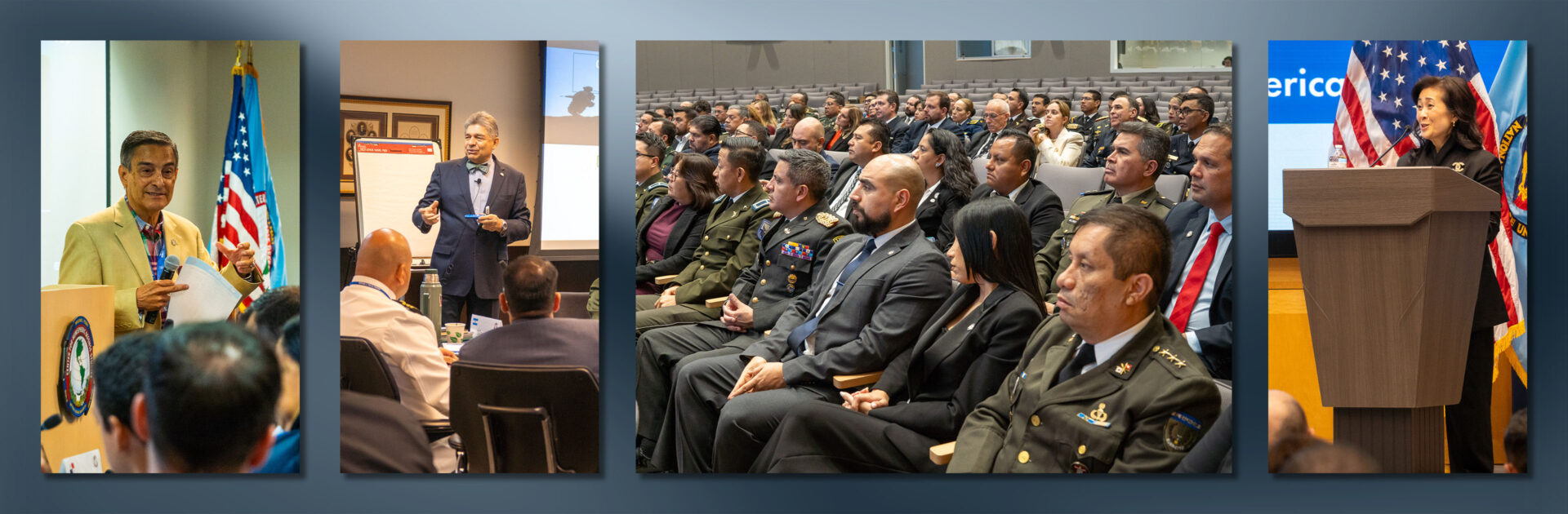
From April 20 to May 1, 2026, the William J. Perry Center for Hemispheric Defense Studies hosted 106 participants from 14 countries for two concurrent in-residence courses: Cyber Policy Development and Artificial Intelligence Applications for Defense (CYBER/AI) and Governance and Strategy for Security and Defense (GSSD).
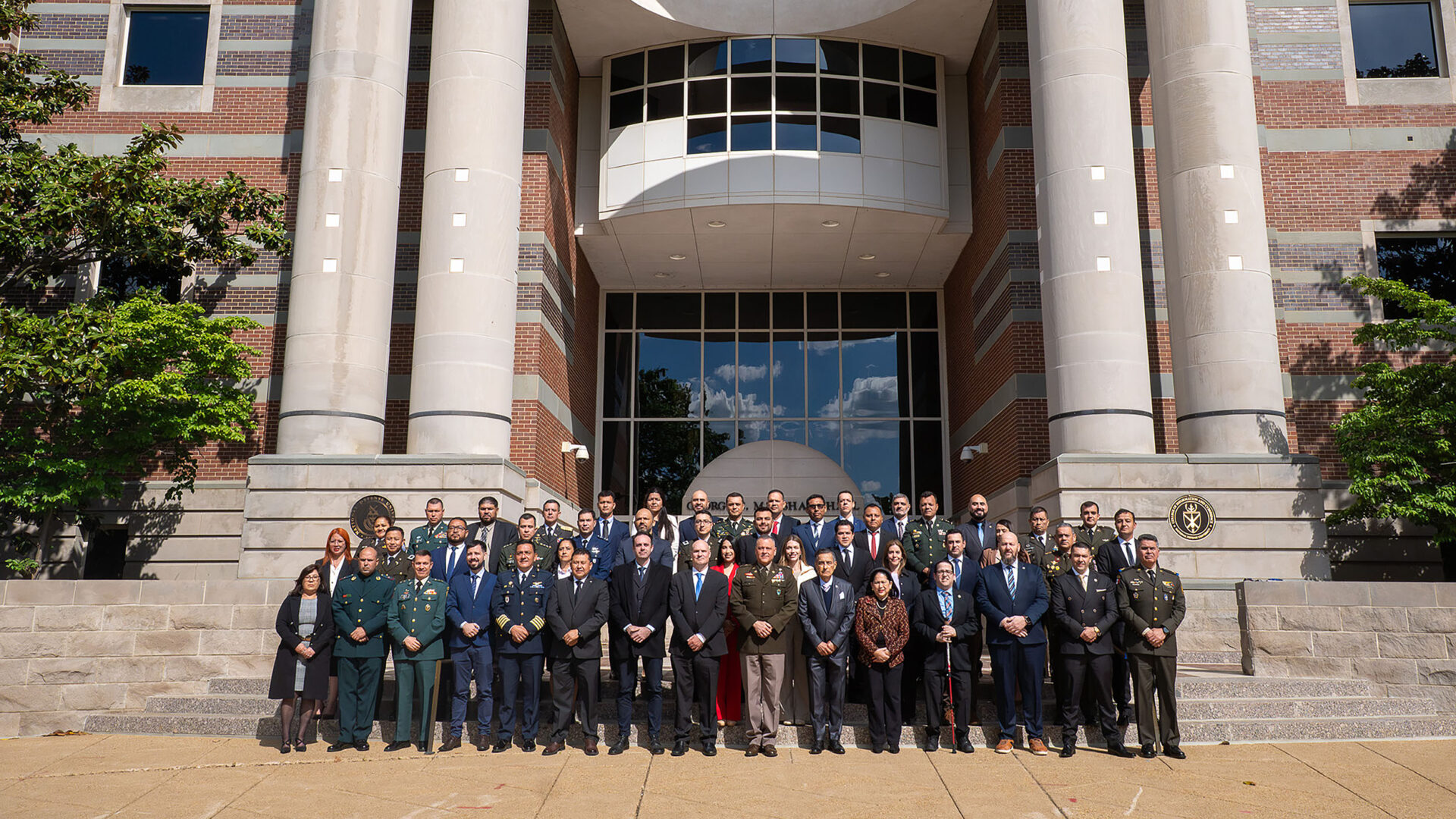
CYBER/AI 2026
CYBER-AI, directed by Perry Center Professor Dr. Boris Saavedra, with Deputy Course Director Ms. Celina Realuyo, examined cyber governance at the intersection of policy, strategy, and emerging technologies. The program emphasized the role of generative artificial intelligence in strengthening state competitiveness while also addressing its risks. Through lectures, discussions, and simulation exercises, participants analyzed threats such as ransomware, disinformation, cybercrime, and vulnerabilities in critical infrastructure. The course also explored US cyber policy and strategy, interagency coordination, and international cooperation, equipping participants to design policies and strategies that enhance cybersecurity governance across the Western Hemisphere.
GSSD, under the direction of Perry Center Professor Dr. Luis Bitencourt, conducted a comprehensive examination of security and defense governance in democratic contexts. The course explored the evolving strategic environment and the expanding concept of national security, including the impact of transnational organized crime, global supply chains, and geopolitical competition. Through a combination of virtual and in-residence phases, participants engaged in critical discussions on defense policy, civil-military relations, strategic planning, and governance frameworks. The program emphasized comparative analysis, enabling participants to evaluate national approaches, identify best practices, and strengthen institutional effectiveness in security and defense sectors.
At the start of the in-residence phase, Perry Center Interim Director Colonel John Dee Suggs Jr. delivered welcome remarks, noting that “regional security depends on strong partnerships, shared understanding, and continuous collaboration—and this program is designed to turn those principles into action.”
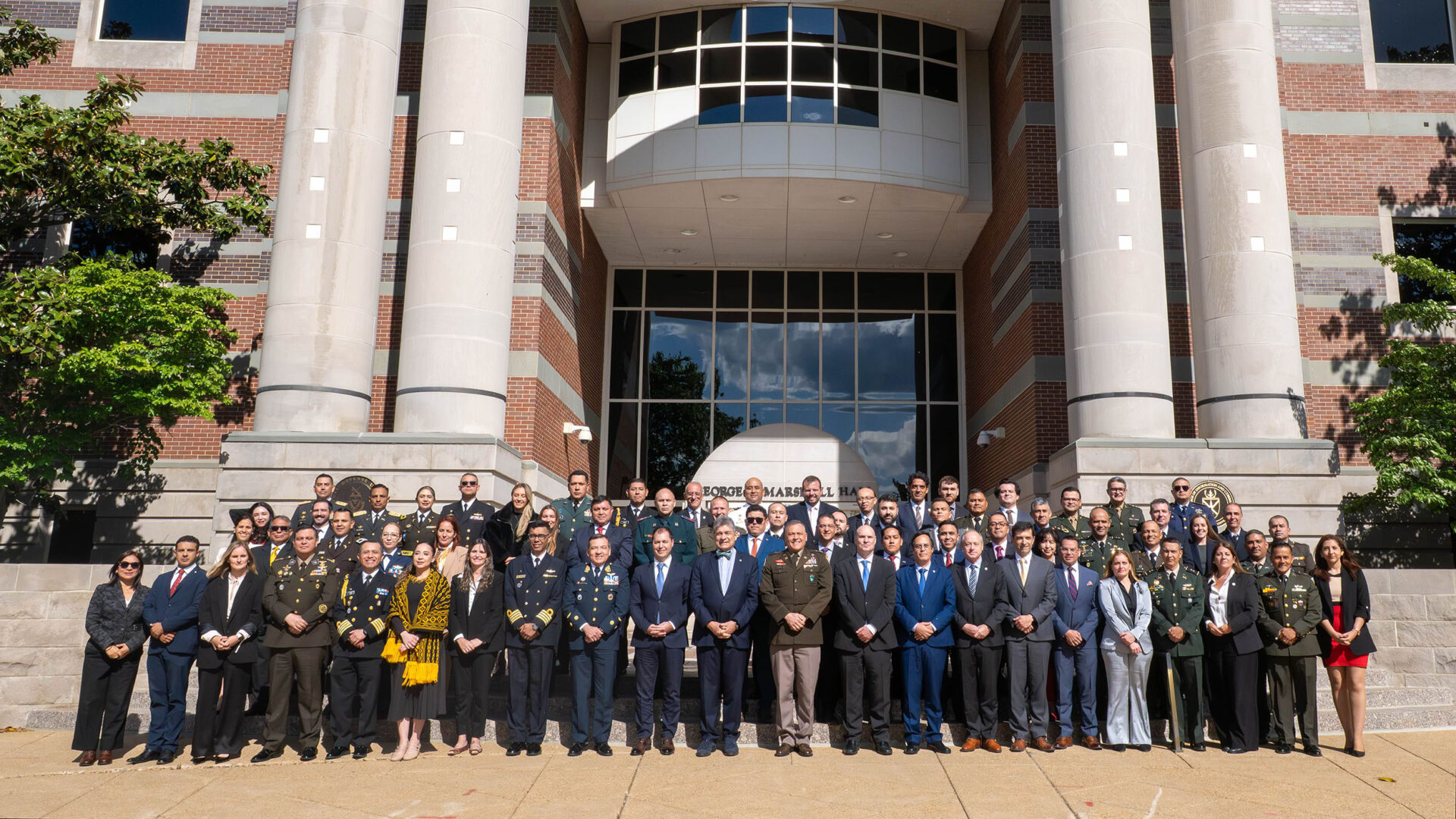
GSSD 2026
Throughout the two weeks, both courses fostered dynamic academic engagement through lectures, guided discussions, group work, and applied exercises. Participants exchanged professional experiences, strengthened analytical skills, and developed practical approaches to complex security challenges affecting the Western Hemisphere.
Perry Center leadership and distinguished faculty joined participants during the program and graduation events, reinforcing the importance of education and collaboration in advancing regional security. The courses reflected current US strategic priorities, including the National Security Strategy, National Defense Strategy, and executive guidance on cybersecurity and artificial intelligence.
During the graduation ceremony, Suggs remarked that “no one leads alone—leadership is a team effort that requires adapting, making decisions with incomplete information, and moving forward.” Guest speaker Ms. Elizabeth Phu, Chancellor of National Defense University’s College of Information and Cyberspace (CIC), emphasized that the success of national strategies is determined not on paper but in execution, requiring leadership, adaptability, and coordination across governments and with international partners to address complex, transnational threats.
The Center also recognizes facilitators and collaborators, including Cyber Policy Fellow Dr. Heriberto Acosta, Dr. Diego Rodríguez, Mr. Maximiliano Scarimbolo, Dr. Gonzalo Salimena, Dr. Jacintho Maia, Dr. Carlos Ojeda Bennett, and Mr. Juan Carlos Gómez. The Center further extends its appreciation to the dedicated Perry Center staff whose behind-the-scenes efforts ensured the seamless planning and execution of the program. The Center also recognizes the valuable contributions of guest speakers from the National Defense University, US Southern Command, the Department of State, the Department of Justice, US Cyber Command, the FBI, and the Organization of American States, whose expertise enriched the academic experience.
Through rigorous analysis, collaborative learning, and policy-oriented application, these courses strengthened regional partnerships, enhanced strategic thinking, and advanced the Perry Center’s mission to build enduring networks of defense and security leaders across the Western Hemisphere.