
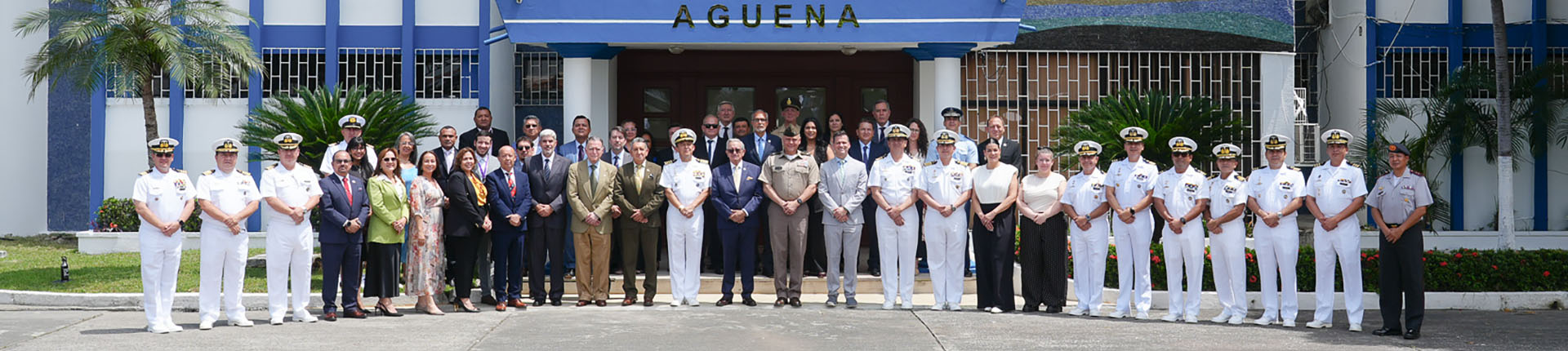
From May 11 to 15, 2026, the William J. Perry Center for Hemispheric Defense Studies, in collaboration with Ecuador’s Naval War College, co-organized the Advanced Maritime Security Policy Course (MSP) in Guayaquil, Ecuador. The course was co-directed by Perry Center Professor of Practice Eric Driggs and Ecuadorian Navy Commander Santiago Villacís Beltrán. The program brought together participants from across the Southern Cone to deepen their understanding of the strategic, operational, and legal dimensions of maritime security in the Americas.
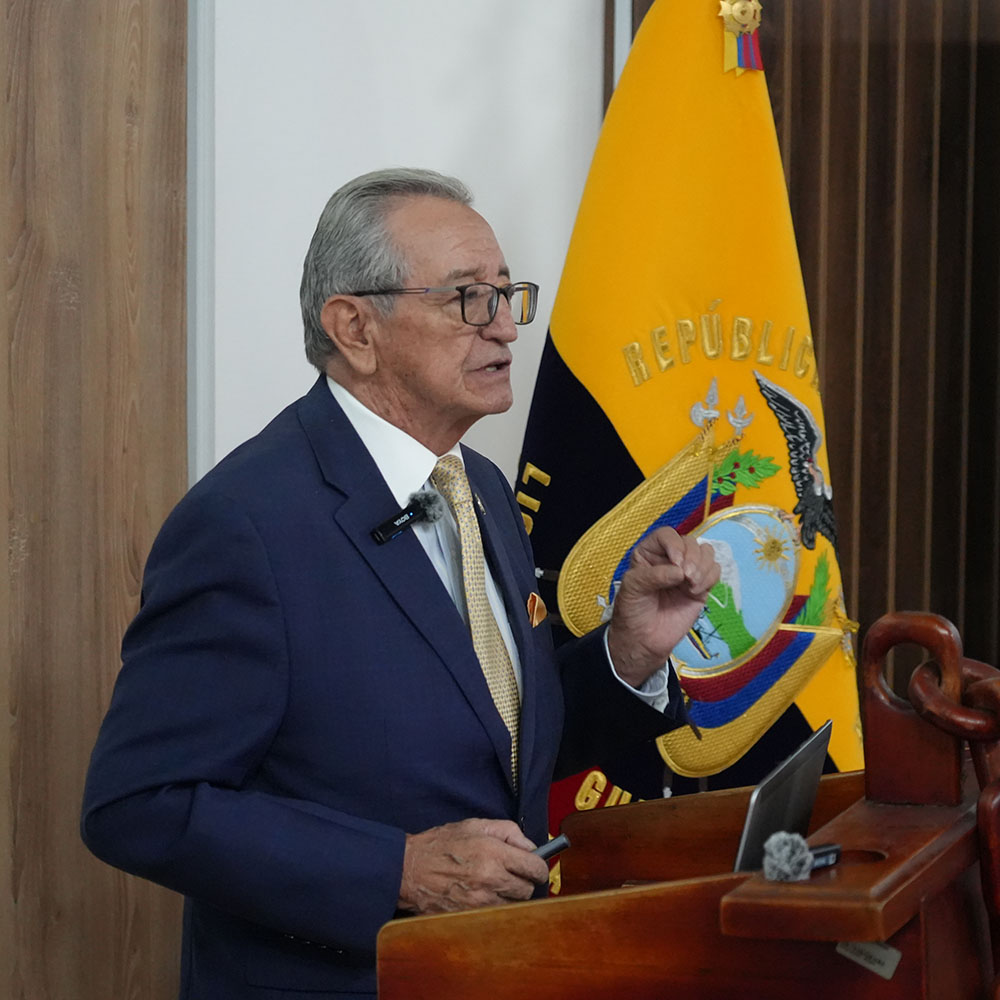
Former Minister of National Defense, General (ret.) Oswaldo Jarrín Román provided keynote remarks for the course’s opening
The course opened with welcoming remarks from Perry Center Director Colonel John Suggs Jr. and Rear Admiral Marco Rocafuerte Castro, Director General of Naval Education and Doctrine of Ecuador, who emphasized the importance of hemispheric cooperation and regional interoperability in addressing transnational threats. As the keynote speaker, General Oswaldo Jarrín Román, former Minister of National Defense of Ecuador and Perry Center alumnus, examined hemispheric security through a political-maritime lens, highlighting how hybrid threats, narcotrafficking, illegal fishing, and growing geopolitical competition require greater regional cooperation and interagency interoperability.
The course provided a comprehensive analysis of the maritime domain as a strategic space where global trade, geopolitical competition, and the governance of the global commons converge. Participants examined the economic and strategic importance of the world’s oceans, as well as the need to strengthen maritime domain awareness in an increasingly complex security environment.
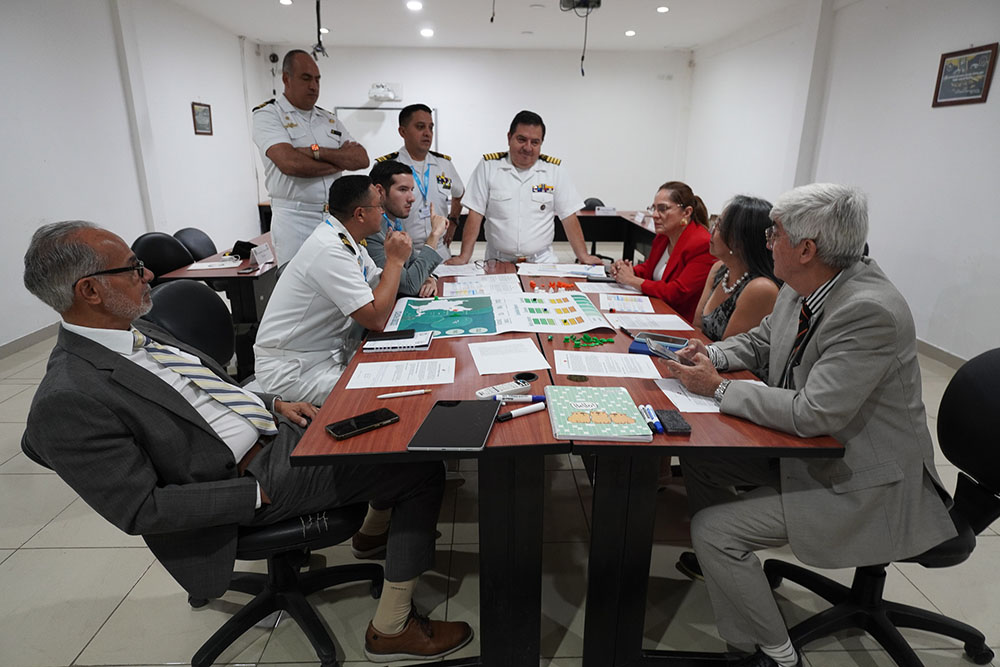
Participants collaborated during tabletop exercises addressing real-world issues
Throughout the week, the program addressed key topics including international maritime trade, the impact of external shocks on global supply chains, and the evolving dynamics of maritime transportation. It also examined threats such as illicit trafficking of drugs, weapons, and persons, as well as illegal, unreported, and unregulated fishing. The course further explored the role of armed forces and civilian institutions in responding to these challenges from legal, operational, and public policy perspectives.
The MSP course also incorporated discussions on maritime governance, sovereignty, and jurisdiction in ocean spaces, including regional approaches such as transboundary governance in the Southeast Pacific. The course addressed emerging issues such as digital transformation, maritime cybersecurity, and hybrid threats, including a discussion of regions such as Antarctica within the broader international security context. Designed to support US and partner nation policy priorities, the MSP course promotes long-term collaboration, strengthens professional networks, and builds communities of interest in maritime security. Through lectures, moderated panels, and small-group discussions conducted in a non-attribution academic environment, the course provided a platform for civilian and military professionals to exchange perspectives and enhance regional cooperation in addressing shared challenges.
The Perry Center is honored to collaborate with Ecuador’s Naval War College in advancing a shared vision for maritime security and regional integration through professional exchange, education, and dialogue. This partnership underscores the importance of regional cooperation and reaffirms both institutions’ commitment to promoting a secure, stable, and rules-based maritime environment in the Americas. The Perry Center also extends its appreciation to the Ecuadorian officials, faculty, and staff whose support and collaboration contributed to the success of the course, as well as to the Perry Center operations team, Associate Director of Operations and Administration María Fernanda Martínez and Operations and Administration Coordinator Liesl Kunz, for their dedication and support throughout the program.